|
A great worldview article from James Macpherson: https://jamesmacpherson.substack.com/p/news-senator-payman-seeks-allahs Muslim Senator Fatima Payman has put religion back on the front page after revealing she asked Allah for guidance on what to do in the Senate.
The 29-year-old old West Australian broke ranks with her Labor colleagues this week to vote with the Greens in favour of Palestinian statehood. She was disciplined by the party (for breaking ranks, not for praying to Allah) and has since quit Labor to move to the crossbench. But the very idea that Payman sought wisdom from Allah before voting on policy issues has surprised many Australians who rarely give a second thought to religion. The fact is that no-one arrives at any issue values free. And we all have a religion - whether we believe in God or not. Your religion, or if you prefer your worldview, is in essence your answer to these five big questions …
A Christian, for instance, believes people are created in God’s image. With that worldview, it is impossible to agree that abortion is okay. An atheist, on the other hand, insists that human life is entirely accidental and no more imbued with the divine than a banana. Someone with that worldview might find abortion distasteful, but has no grounds to argue against it. In both instances, religion informs the policy position. So it’s redundant to ask whether politicians ought seek guidance from religion since they are already being guided by their religion, whether they realise it or not. The better question is which religion we would prefer our politicians to take their cues from. Senator Payman is a devout Muslim and so of course she would be taking her cues from Mohammad. Just as a Christian politician would seek wisdom from Jesus. So the question is whether you’d prefer your nation’s leaders getting their marching orders from Jesus or from Mohammad. On that question you don’t need a masters in comparative religion to work it out. Just take a quick look at the globe. Western nations - like the UK, the USA and Australia - are overwhelmingly built on a Judeo-Christian worldview. Middle Easter nations - like Iran, Iraq, Afghanistan and Saudi Arabia - have been built on an Islamic worldview. Which would you prefer? As Jesus said, by their fruits you shall know them. And let’s not forget our atheist friends who, consciously or not, take their cues from Nietzsche. Think Communist China or the former Soviet Union. So you can build a nation on the the law of love (Christianity), Sharia Law (Islam), or the law of the jungle (Atheism). Which would you be happiest with? Australia’s founders never imagined a country in which politicians were so arrogant that they made decisions without seeking wisdom from above. The preamble to the Constitution - written in 1901 - declares that Australia would be a nation “humbly relying on the blessing of Almighty God”. Notice it doesn’t say “humbly rely on the blessing of Almighty Allah”. If it did, we’d be more like Somalia than Australia. Fun times! Our forefathers envisaged political leaders who would be humble enough to acknowledge a power higher than themselves and to ask for wisdom. And they assumed the higher power would be the Christian God since, in 1901, there was virtually zero disagreement. A lot of people complain that our country is not what it used to be, that it has changed, and not for the better. I don’t disagree. A lot of people are also waking up to the fact that the chance in our nation is not just economic and not just social. Even non-church going people are starting to be open to the idea that we may in fact have a spiritual problem. Again, I don’t disagree. Our politicians stopped seeking wisdom from almighty God and instead - like a sailor who stopped believing in the stars and so tied a lamp to the mast of his boat and navigated by that - have done what is right in their own eyes. The results have been disastrous. There is only one way for Australia to regain its prosperity and its freedom. We need Prime Ministers, business leaders, educators and parents to once more humbly rely on the blessings of Almighty God. And I don’t mean Allah.
0 Comments
It matters to a lot of people: about half of Aussies surveyed said the matter of science and evolution prevents them from taking the claims of Christianity seriously.
First let me caution anyone in that situation, don’t make creation timing the issue that determines your eternal destiny. The eternity-breaker is whether or not you trust the living God. There are other good & sufficient reasons to believe in and trust the Creator. Such as: . the manuscripts and archaeology of the Bible, which indicate it was reliably transmitted, and the prophecies and storyline within it which indicate a divine source. . the historicity of the life, death and resurrection of Jesus, the latter giving further evidence of the divine. So a supernatural creator is still evident even without addressing the timing issue. I used to be ambivalent about creation timing because I had those other anchor-points for trusting God through Jesus. Maybe that's why some Christians leave the timing question unanswered, or even settle on long-age interpretations, because they have other good foundations for their faith instead. However, for Aussies without any of those other anchor-points, it’s understandable that science and evolution is a problem, because what we read in Genesis 1 is so shockingly different from what most of us are taught in school about billions of years and evolution. So it is fair to ask, “which timing is right?” Let’s start with this: "it is reasonable to expect the Creator's Account to interpret ALL observations consistently.” I'll defend that, but for now I'm saying we should not have to discard the Bible in favour of simplistic assertions about what "the science says.” We should be able to research and uphold all the legitimate observations of both sciences and the Bible. Equally we agree that we cannot uphold all contradicting interpretations of those observations. Now when I finally did examine enough of the evidence (both Biblical and scientific), I found that when it comes to origins, most of us were not given some critical information:
So where can normal people like us find specific observations with interpretations that are Biblically consistent? I recommend creation.com. On closer inspection as an adult, contrary to what I was taught at school and most media outlets, I have found that Bible-based interpretations of origins involving special creation are more consistent with all the relevant observations than any naturalistic interpretation. After all, it's reasonable that The Creator’s Account would interpret ALL observations consistently. The upcoming Creation Ministries tour of Israel will be much better than the three trips I've done, and not so much more expensive, plus proper hotels! The reason I'm seriously considering it is the destinations! The tours I've run major on the life of Jesus. But this tour will confirm much more than those events. You'll see in person that the Biblical historical descriptions are confirmed by the locations and archaeological finds. In addition to the main Jesus-related places I've taken others before, this tour visits:
Check out all the details here: israel2023.creation.com Maybe I'll see you there... 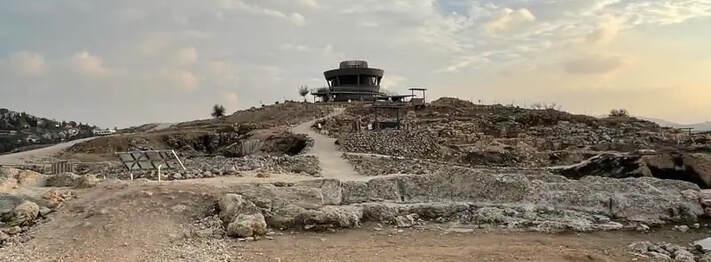 Here's a good summary about why Easter matters so much. It only takes 5-10 minutes to read.

Sooner rather than later, shift the conversation from world-views to foundations of worldviews. That is where I want the convo to go anyway! Moreover unless we understand different foundations, we can't talk meaningfully about worldviews. See the video below at 45:54 (Note: Ken defines world-views as based on foundations, whereas I define worldviews as including foundations, but his distinction is helpful here.) If people are attacking you for your world-views (about say, abortion, gender, love), it may only mean you are inconsistent with THEIR foundations. So exposing the different foundations, allows you to have a deeper more useful conversation about that first. And it raises the question: WHOSE foundation is the true one - God’s Word or man’s word? God's Word really shines as an objectively reliable foundation.
We have objective observations, and consistent interpretations of those observations which have better global explanatory power. We have good and sufficient reasons to accept the Bible's historical reliability, and its divine revelation. (See apologetics for how we know the Bible is reliable - Core Stuff). Compare this Biblical foundation with naturalism's… .Naturalism simplistically excludes any supernatural phenomena, only admitting self-supporting data, a closed loop for a closed mind. Also, Naturalistic science is often biased by peer pressure and financial pressure to conform or be cancelled, especially wherever scientists are unquestioningly wedded to their own interpretation (eg. evolution.) Note there is a crucial difference between observational science (which is based on the measured data), and historical ‘science’ (which depends more upon interpretations of the data.) All interpretations must work with the same observations (not simply exclude observations that don't fit.) And Biblical interpretations work just as well with all the observations as any other interpretation, in fact better - eg They offer more consistent interpretations across all disciplines, such as design, genetic entropy, biology, geology, anthropology, cosmology, historical archaeology & manuscript evidence... Search creation.com for your subject of interest. Interpretations rely on founding assumptions. Question them. Expose them. Until your naturalist protagonists can see that, & why, our foundations differ from theirs, they’ll not see why our world-views differ from theirs. This is such an obvious point. Maybe some refuse to look foundationally because it's easier to simplistically label us illogical / primitive / hateful / conspiracy theorists. That would be divisive avoidance of real world observations. And the fact is, we’re none of those things. Rather, our world-views logically flow from a different foundation, (better, more consistent with all the observations, more solid/good/life-giving, but different), a foundation worthy of their consideration... if they only would. If they DON'T see that much, well that would be illogical, wouldn't it. If they DO see that much, they should give us a little credit. And consider our foundations. This is a brilliant read: chapter 1 of the Creation Answers Book.
What do we mean by God, how do we know he exists, what difference does he make. So many answers, and so concise: https://creation.com/god-existence-cab-1 Question: Where can we see evidence of Jesus today? Are there any facts? Answer: Yes, facts past and present, much more than many realise...  HISTORICAL FACTS still apply for today. If facts are true, it doesn’t matter when they were discovered. Historians exist to get to past facts, like the existence of Jesus. The facts on the Onepager are not arguments from gaps (info we don’t have), but from facts (info we DO have.) And those facts all point to Jesus’ reality, not only in the past but today as well. They support the present realities of: a Creator; human sinfulness; the Bible’s reliability and revelation; Jesus's life, death, resurrection, ascension, & Spiritual presence, including in our present day. These facts provide a reasonable foundation for the Christian worldview of today’s world. These facts still apply - to YOU today. Your existence is evidence of God, your life, every breath you take, are facts. Your Bible reliably explains your sin, the struggle & grace in your life, and it establishes facts about your saviour. Such facts from the past remain relevant to what’s true in the present in your life. + NEW FACTS keep arising today. Examples include: -Archaeological finds which increasingly confirm the places and events of the Bible. -Mendel’s Accountant, shows the deleterious effects of mutations over time, disproving evolution as a source of complexity. -Problems with uniformitarian long-age calculations, support the cataclysmic events in the Biblical worldview. + CURRENT CONSEQUENCES continue to prove Biblical facts. For example: -Consequences of Godly morals, vs self-centred morals. -Consequences of civilisations operating "under God” according to the Bible, vs "under self" democracies. -Consequences of a Biblical worldview are consistently better for individuals, families, politics, war, science, economics, psychology, ethics - and the consequences are often life & death. This suggests that the Jesus worldview is best aligned with reality. (ie. true.) + COMMON EXPERIENCES of the living Jesus continue to occur. Just because they are subjective to each individual doesn’t mean they aren’t also objectively real. Rather, their ongoing occurrence invites deeper investigation. Upon investigation we find: -Details, nuance, and life-directing impacts. -Agreement with the descriptions & character of the Biblical Jesus. -They occur across cultures and ethnicities - they don’t arise merely out of culture but also despite culture. -Experiences consistently include answers to prayer, awareness of spiritual presence, spiritual inspiration & guidance, deliverance from bondages, and healings - physical, spiritual, mental, emotional, and relational. -They are widespread, with billions reporting similar encounters, and ongoing relationships, with the life-giving Spirit of Jesus. -An open offer to all people to experience this Jesus too. These experiences can be qualitatively compared with others, and to the Bible. So the claim is that Jesus is an objective reality you can meet for yourself. Q: Why doesn't EVERYONE accept these facts? Hesitations may include: -Traumas that have left people emotionally wounded, resulting in a mindset of basic distrust, fear, bitterness, rejection, or the like. Understandably this makes them reluctant to entrust themselves to God. Emotional healing is needed. -Ignorance of the facts, and/or their conclusions. Education can help. -Self-centredness: devotion to their own self-driven lifestyle & the control to which they have become addicted/accustomed. Facing one’s own wilfulness is very hard. -Self-delusion is surprisingly easy. Even truths are often misused for false conclusions - for example, “God has never shown himself to me.” This may be true in one sense, that God hasn’t made an abnormal display to force a concession out of that person, but it's not true in other senses, that there are many ways in which God has indeed revealed himself to us. So this "one-sense-true-statement" can be misused for the false conclusion that the creator therefore does not exist. Yet the statement is only true in a limited way, as it remains very possible that the creator exists unrecognised, and that there may be very good reasons why he reveals himself in the ways he does and doesn't. There are many such misuses of truth statements which we must learn to recognise for what they are - self-delusion. -Peer pressure, pride coupled with fear of rejection, can make a person deny truths they would rationally accept in less emotionally threatening circumstances. (See Peter’s denials.) A healthy sense of identity in Christ will help. -Fear of exploring the facts, lest discovering Jesus is alive means a significant change to their worldview and lifestyle. Courage to learn is needed, to find and face the truth. -Fear of the risk that they might miss out on an expected experience of Jesus, so it’s safer not to take the risk. Courage to trust is needed, enough to honestly pray.  Why doesn’t God just "poke his head out of heaven" and "definitively PROVE" himself to us all? "Is He toying with us, playing some kind of cosmic game of hide & seek? Offering himself, then hiding from us?" Well, that’s one (perhaps bitter-&-twisted) way to look at it. But here are some other ways to look at it: 1. How much MORE evidence do we really need? Truthfully we already have more than enough evidence: the existence of all physical things, design, life, complexity, universal altruism, conscience, free-agency, reason, relationship, religion, archaeology, history of the highest order, reliable records of his personal presence and action, spiritual experiences to today, all matching the Bible. Plus the offer of your own personal relationship with his Spirit. Outside of those things… what else is there?! 2. Would some plain, spiritual, revelation REALLY make us believe? -If it happened to someone else, couldn’t I still merely discount it as “just another subjective experience”? -If it happened to me, couldn’t I just rationalise it away as, “just some psychotic episode"? -If it happened to a lot of us at the same time… as happened with Jesus’s miracles before his death, with his resurrection appearances, and with his Spirit's manifestations from Pentecost onwards... all those eyewitnesses were still ignored by many. As Jesus said in one of his stories, ‘If they do not listen to Moses and the Prophets, they will not be convinced even if someone rises from the dead.’ 3. The free agency of each person’s heart plays a key role, their disposition, whether they WANT to face up to Jesus. - If they DO want to meet and serve Jesus, there are more than enough facts to go on, they aren’t hidden, they can find them, and they can pray. - If they DON'T want to meet Jesus, then humans are very capable of ignoring or rationalising away from God. If that is what they want, then the creator allows them room to do that. For the Supreme Being of the Universe to allow this seems remarkably gentle and humble. NB: TURNING AWAY also has consequences to consider God’s ultimate plan is to gather the people who will come to him, to be with him forever. But those who refuse him will not be in that gathering. That’s why Romans 1 says, "The wrath of God is being revealed from heaven against all the godlessness and wickedness of people, who suppress the truth by their wickedness, since what may be known about God is plain to them, because God has made it plain to them. For since the creation of the world God’s invisible qualities—his eternal power and divine nature—have been clearly seen, being understood from what has been made, so that people are without excuse. For although they knew God, they neither glorified him as God nor gave thanks to him, but their thinking became futile and their foolish hearts were darkened. Although they claimed to be wise, they became fools and exchanged the glory of the immortal God for images made to look like a mortal human being and birds and animals and reptiles. Therefore God gave them over in the sinful desires of their hearts to sexual impurity for the degrading of their bodies with one another. They exchanged the truth about God for a lie, and worshipped and served created things rather than the Creator—who is forever praised. Amen.” We have observed all of this happening in our time too. And it simply constitutes further evidence for the truth of God’s word. Meet Jesus EVERYWHERE
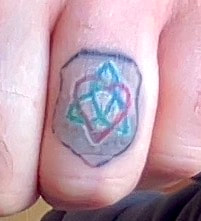
What if I want to meet Jesus? Once I've recognised the veracity of these many facts, how do I start a real relationship with Jesus? 1 - PRAY. Simply tell the ever-present spirit of Jesus that you want to do things his way from now on, and ask him to show you what that is. 2 - LOOK & Listen for his answers. Some places to look are obvious: read the Bible, and ask other Christians about what is already very clear, that he is likely to do with you. Some listening takes practice. Our modern world is crammed with voices & signals throwing so much information at us, that we now actually have to learn to unplug, declutter, be still and quiet, in order to sense God’s gentle presence and promptings. Then we can begin to learn to put off and put on: put off bad identities, habits of thinking, behaviour, addictions, and put on Christ-filled identities, habits of thinking & conduct. 3 - DO what he says. Follow his purposes for our lives. Try it, and see how you deepen and grow. Core practices include time with him, time with other believers, and time with other people as salt and light in the world. The aim is not legalistic obedience, but closer togetherness. You can learn to meet with Jesus everywhere you go, in everything you do. When it's his will, you will encounter his pleasure and joy in it. When it’s not his will, you will find he challenges you there, to put off that thing and put on something better. Colossians 1 says, "For in him ALL THINGS were created: things in heaven and on earth, visible and invisible, whether thrones or powers or rulers or authorities; all things have been created through him and for him. He is before all things, and in him all things hold together.” When we learn to meet with Jesus at all times, in all places, literally in all things, then the evidence for Jesus becomes clear in the air we breathe, our very life. The factual truths outside of us merely confirm the living Truth inside of us. It turns out that evidence for Jesus is actually... in all things. And all these facts become clearer for those with eyes looking to see them. So it turns out that the first step to RECOGNISE him is actually in your heart, your basic motivation. Or as Jesus said, “He who has ears to hear, let him hear."  At a wedding recently I used these symbols to illustrate the Great Mystery (Ephesians 5) of marriage. First the triquetra, an old Celtic symbol for the Trinity, God the Father, Son, and Holy Spirit. It also illustrates how Christian marriages invite God into our marriages, he strengthens the relationship like a threefold cord (Ecclesiastes 4)  But the Mystery of Marriage goes yet deeper:
Apocalypse. It actually means uncovering, revealing, as in the Biblical book of Revelation. But ironically we have smothered the word with such fearful connotations that we covered over the very thing that was meant to be uncovered! We fear the dangers so much we miss the main point. Since we apparently live in such apocalyptic times... it’s well worth asking: what was meant to be uncovered? Answer: the Ending to The Big Story. What Big Story? The overall narrative from the beginning of time to end. The Biblical Story. The Story within which all our life stories are contained! Which begs the further question, what part will you play in it? Using the Olympic Rings, here’s a graphic summary of that Story:  Just like all great stories, there's an Author, Evil, Salvation, Freedom & Community. Author - Blue reminds us of Creation and thus its Creator. God creates, creation is good, humans are made in God’s image, very good. But then... Evil - Black, darkness, selfishness, the sin that damages creation. We try to take over from God, to run our own lives but only ruin our own lives. This sinful fallenness is shown from Adam and Eve, through every story in the Bible, down to the present day... Saviour - Red, blood, the Saviour’s mortal battle to make things right. The Law and the Prophets (>>) foreshadow and predict that Saviour to come. The Old Testament repeats stories of sin and salvation: Adam, Noah, Abraham, Israelites, Judges, Kings, Writings and Prophets: we ruin life, God saves, repeat. There are always warnings, then judgement for the stubborn, and salvation for the faithful. The cycles repeat. But then comes The Saviour... Christmas (X) reveals the Christ, the Messiah. 'Jesus' literally means 'Saviour.' He is none other than the Creator become human, Immanuel, God-with-us. Love summarises his message and his actions, love God first, and people as yourself. The cross is where Jesus has DONE what we can’t DO for ourselves: he himself bore all our collective sin, guilt, shame, griefs, sorrows etc. for us, on our behalf. Thus separated from God, he dies in our stead for all of our sin. Paid in full! This means that sin is no longer held against us - we are put right with God! An amazing gift of mercy! His resurrection overcomes death with life. This proves he has overcome our sin with his purity. For 40 days he appears, explaining all Scripture to eyewitnesses, offering His salvation to all. Then… Freedom - Gold, the Spirit of resurrection, in us, to set us free from the law of sin & death. Jesus ascended, then 10 days later sent His own Spirit into His people - that's whoever trusts him, helping us to live like Him. An amazing gift of grace! And this gift is still being given and received today… Community - Green, Grow in these relationships now and forever. Go share this Big Story. Loving God and people goes on now and forever (>>), in fact The Big Story ends with a divine marriage: Christ receiving his Bride - us! The Big Story turns out to be a Divine Romance. So for now we are supposed to Grow in those relationships: turn from our sin, trust the Creator-Saviour-Spirit, and live life his way. This trust is what determines our part in the revealed ending: will we receive His amazing gifts and be in the marriage with the faithful? Or will we refuse, ru(i)n our own lives, and face the judgement with the stubborn? Go share this Big Story to anyone who will listen. So I’m now sharing this Big Story with you. May God give you ears to hear it and pass it on. I'm convinced this Big Story is actually a True Story, for good reason: it is uniquely coherent, uniquely comprehensive from the beginning of time to the end, and uniquely consistent with all the data we have available to us - including logical, scientific, historical, experiential, relational and spiritual observations. Therefore it is reasonable to expect that the revealed ending will also come true. Yes, the Apocalypse (the Revelation) contains frightening warnings and judgements, alarming events to come - wars, calamities, plagues, martyrdoms at the hands of evil economic and political ideologies. The warnings and judgements will cycle some more - exactly what we see in our day - little re-tellings of the Big Story of evil, salvation, freedom and community to come. But then The Big Story will end as revealed, with a final judgement for the stubborn, and a wedding for the Bride and Bridegroom who is the Creator-Saviour-Spirit. But if we only focus on the calamities, we cover over the main revelation to be uncovered: the Ending to The Big Story. Don’t miss the main point... What part will you play in The Divine Romance? 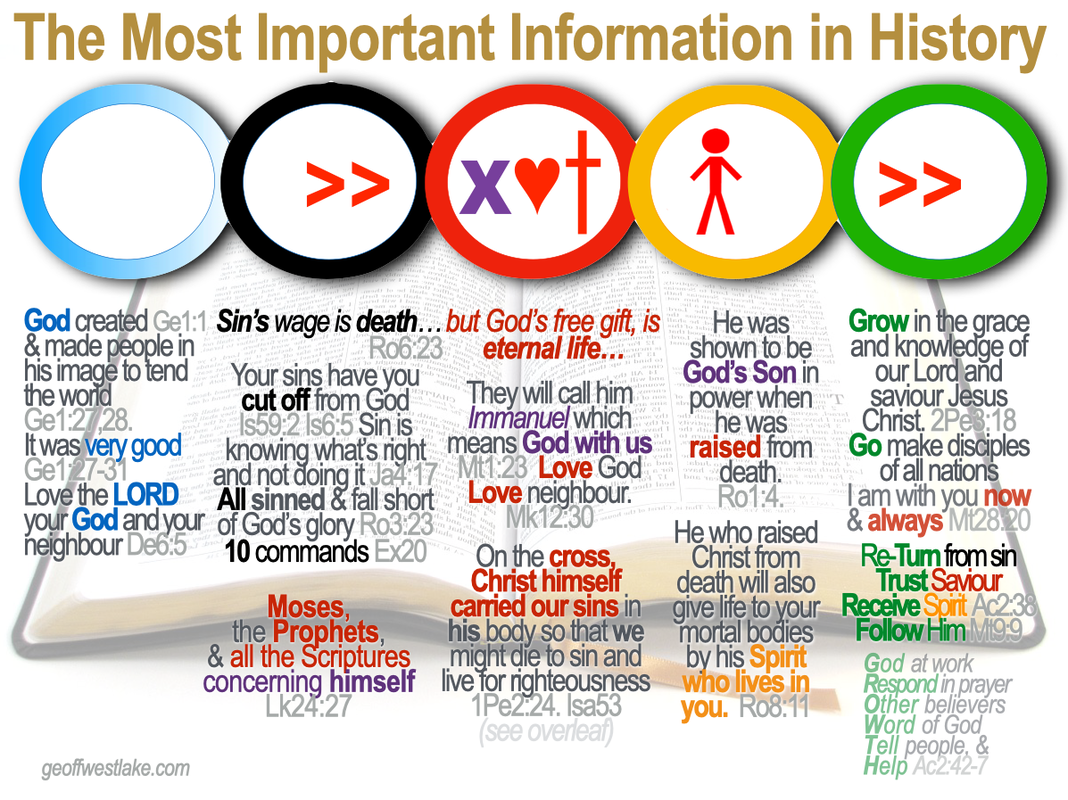 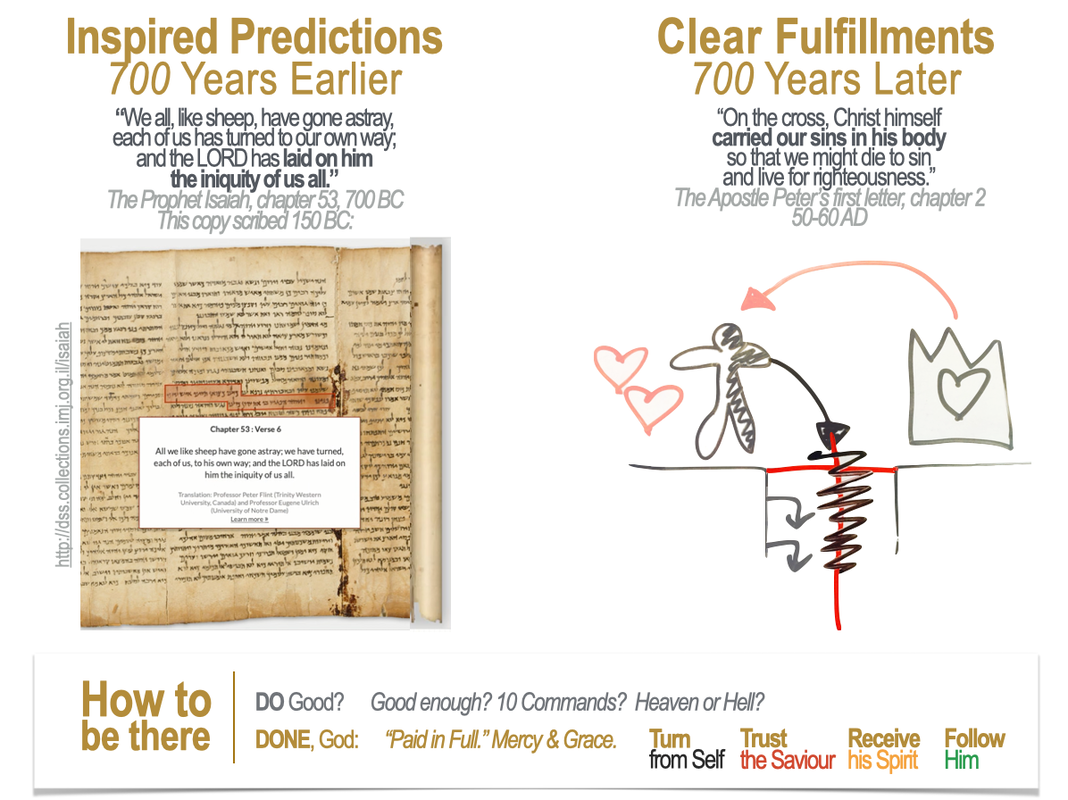  I'm not panicking because my worldview is not limited to Naturalism. COVID-19, bushfires, climate change, etc. merely remind me of our mortality, and the bigger view of life. But Naturalism, which dominates Western public discourse - news and entertainment media, social media, politics, law - across Australia, NZ, USA, UK and Western Europe, has no bigger perspective. As such it's a worldview that generates the very fear, depression, and hostility we see with every reminder of how fragile we are.
Naturalism in a nutshell:
Naturalism is both shallow and brittle. It's shallow because it rules out other dimensions, and disregards all non-physical phenomena observed.
In contrast the Biblical meta-narrative is deep and robust. Don’t be put off by the shallow dismissals on public broadcast. Examine the Bible properly without prejudice against spirituality, and you’ll see why it stands the test of time as uniquely reliable revelation from The Creator to us. Unique because no other volume or corpus of texts has anything close to the following qualities: - Reliable because the archeological and manuscript historical evidence is peerless concerning the Bible's preserved transmission from eye-witnesses to us. - Revelation from God, because miraculously the over-arching Saviour-centred story is uniquely coherent and comprehensive, despite the diversity of 40 contributing authors across at least a 1600 year period. .Plus it contains hundreds, even thousands of specific prophecies, many of which were fulfilled in later parts of the Bible, some of which are yet to be fulfilled in the yet-to-be-completed parts of the Story. Plus it claims to contain, and be, God’s word around 3000 times. .Plus the meta-narrative combines with the readers’ realities to change lives for the better, right up to the present day. (I mean people can relate with the God of the Bible in the present!) The Biblical meta-narrative is deep in that it accepts other-dimensional realities and interacts meaningfully and substantially with them.
Naturalism is a shallow and brittle worldview that discords with reality, and fragments society. The Bible gives a deep and robust worldview that accords with reality, and unifies humanity under God. Our public discourse needs to break out of its shallow, brittle naturalistic worldview. Otherwise it will keep covering up the BIG Story that these apocalyptic events are meant to uncover for us: - that we are mortal, that sin/self/satanic forces are bad, and that we need a Saviour. Leaving God was not progress, but a mistake to address. - turn back, trust, & tune in to the Creator, and accept his salvation now and forever. In this true, deep and robust worldview, fear subsides, and we can live in courage & faith. That’s why, with all these fires, viruses, climate change... I'm neither panicking nor in denial. I know what to think when reminded of my mortality. Not only the creation, but we who have the first fruits of the Spirit also groan inwardly as we eagerly await our adoption, the redemption of our bodies. For we were saved with this hope in mind - Romans 8. The fear of the Lord is the beginning of wisdom - Proverbs 9.  Reasonable Faith
My daughter is a 21-Pilots fan. Proof: today she bought pre-sales tickets to their December show, where they will play music she hasn’t even heard yet because their album isn’t due out until next month. What if their new album is a terrible disappointment? She might have to sit through a whole concert of terrible music... But her purchase is an act of faith. The good kind: reasonable, not blind. The kind that makes for good relationships. There's not an iron-clad guarantee but there are enough reasons to make it worthy of trust. Her faith is based on good reasons: their prior performances, the music she has already heard, the interactions she has already enjoyed in the fandom, their demonstrated trustworthiness as people to date. So she has good reasons to trust that the boys will deliver a concert worth the price of entry. So she bought in. My faith is based on good reasons: God’s prior performances (in demonstrably reliable histories, writings and prophecies), the ‘music’ I have heard already in this life (the good, true, beautiful, life-giving ways that really work), the interactions with God I have already enjoyed alone and together with other believers, the demonstrated trustworthiness and wisdom of God’s character. I have plenty of good reasons to trust that God will deliver a Life worth whatever price he asks of me. So I bought in. Some disparage “faith” per se as if it is blind, based on nothing. Some people seem to blindly believe cliches and assumptions, but these days I’d say that's far more likely among the agnostics of main-stream culture than among the Christians who go against the flow. Most Christians I know have had to challenge the mainstream cliches and assumptions, and have come to my daughter’s kind of faith, a reasonable and well-founded relationship. When people actually examine the reasons for this kind of faith, they often become ready to buy in. Deeper reflections: The Limits of Proof The Phenomenal and the Noumenal - Noumenal realities are important and life-directing. Yet the more noumenal a reality is, the greater the need for good and sufficient reasons. Good reasons are there. Go get 'em.   Is the church better or worse than most people think? The Centre for Public Christianity has produced a massive resource on that topic. It's hours of good stuff, more than enough.
But don't miss all the other material CPX has on other topics too. There's a search bar for libraries of articles, videos and podcasts on:
In my work I focus mostly on the Foundations. How we know that the basics of Christianity are true - that God exists, that the Bible is reliable, and that Jesus rose from the dead. And how these truths fit together to make a really solid and positive foundation for your life. Core Stuff and Boost. The bare minimum info, skills, and relationship that teens really need before they leave home. I believe if you keep this Core Stuff central to your life, you'll be far less likely to distort good things into bad. But then what comes next?
Good answers are there. Go get 'em!  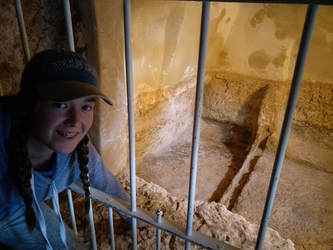 Pippa at Garden Tomb: He is not here... He is Risen Pippa at Garden Tomb: He is not here... He is Risen I returned to Israel in March 2017 (having first visited in 2013) to personally show 18 Aussies the Core Sites of the Core Stuff - where the key events occurred that founded Christianity on solid, historical foundations. As tour leader, I had less time to process the journey, but on the upside I could take the tour where I wanted to go in the time available. We squeezed a lot in - maybe too much if you count that one time I forgot lunch! But it was worth it!  It became a presentation, CSI: Christ Scene Investigation. We personally investigated how the sites agree with the texts of the Core Stuff. We saw for ourselves:
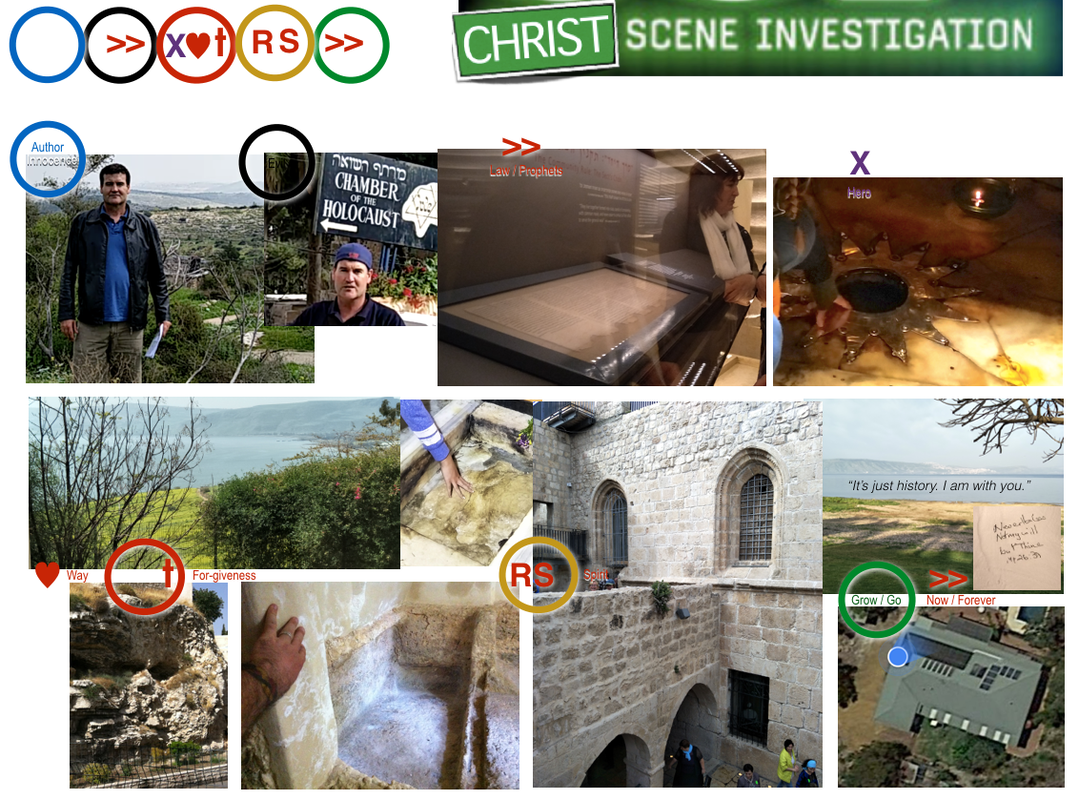 The Core Sites of the Core Stuff of the Christian faith |
Categories
All
Archives
July 2024
|
||||
 RSS Feed